Warp Speed Wagering: How Fast-Paced Casino Design Is Quietly Hijacking Your Sense of Time and Cash
There's a reason Casino Rocket AU chose a rocket as its symbol. Speed is thrilling. The rush of a fast launch, the blur of motion, the sense that something exciting is always just a second away — it's genuinely exhilarating. But here's the thing about rockets: if you're not the one at the controls, that speed can take you somewhere you never intended to go.
Online casino platforms are some of the most meticulously engineered environments on the internet. Every millisecond of load time, every animation, every sound effect has been tested and refined to keep you in the game longer. And at the centre of that design philosophy is speed. Fast gameplay isn't just a feature — it's a mechanism. And understanding how it works is the first step to making sure it's working for you, not against you.
The Engineering Behind the Rush
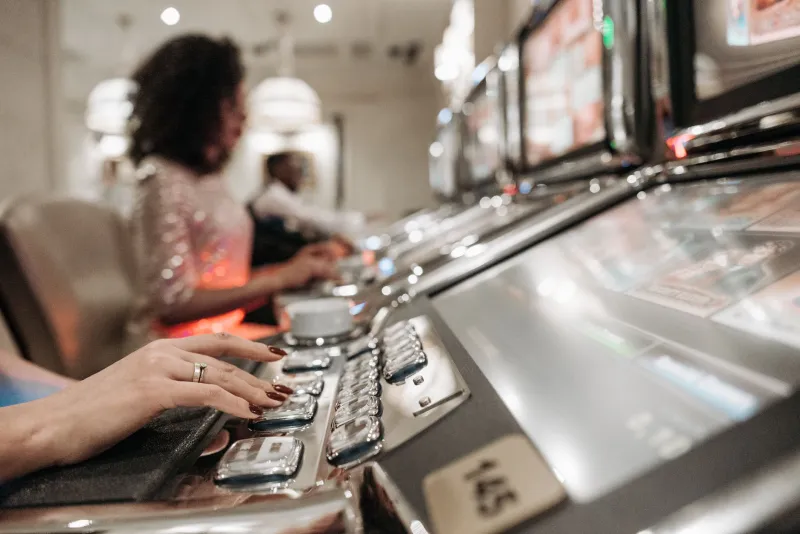
Modern online pokies can complete a spin cycle in under three seconds. Some are faster. Auto-spin features strip away even the minor friction of clicking a button, letting hundreds of rounds run back-to-back without any deliberate input from the player. Loading screens have been optimised out of existence. Transitions between rounds are seamless, almost imperceptible.
None of this happened by accident. Casino developers invest heavily in what's sometimes called "flow state engineering" — creating conditions where players become so absorbed in an activity that time perception warps and external awareness drops away. It's the same psychological state athletes describe when they're "in the zone," and it's deeply pleasurable. The problem is that in a sporting context, flow state produces peak performance. In a gambling context, it produces peak spending.
The faster the game, the less time your brain has to process what just happened before the next round begins. That's not a bug. That's the blueprint.
What's Actually Happening in Your Brain
Neuroscience has a lot to say about how humans handle rapid-fire decision-making — and most of it is not flattering to our self-image as rational agents.
When you're playing at high velocity, your brain shifts processing from the prefrontal cortex — the region responsible for planning, risk assessment, and impulse control — toward the more instinctive limbic system. In plain terms: the faster things move, the less your logical brain is in charge, and the more your emotional, reactive brain is calling the shots.
Australian researchers studying problem gambling have noted that this cognitive shift is particularly pronounced when players are also managing other stimuli — sound effects, flashing animations, near-miss results. These aren't decorative. They're neurological accelerants, pushing your brain further into reactive mode and further away from the calm, calculated thinking that good bankroll management requires.
Add to this the well-documented phenomenon of "temporal distortion" during gambling sessions — where players consistently underestimate how much time has passed — and you've got a potent cocktail. Forty-five minutes feels like fifteen. A hundred dollars feels like fifty. The velocity of the game compresses your sense of both time and money.
Auto-Spin: Convenience or Trap?
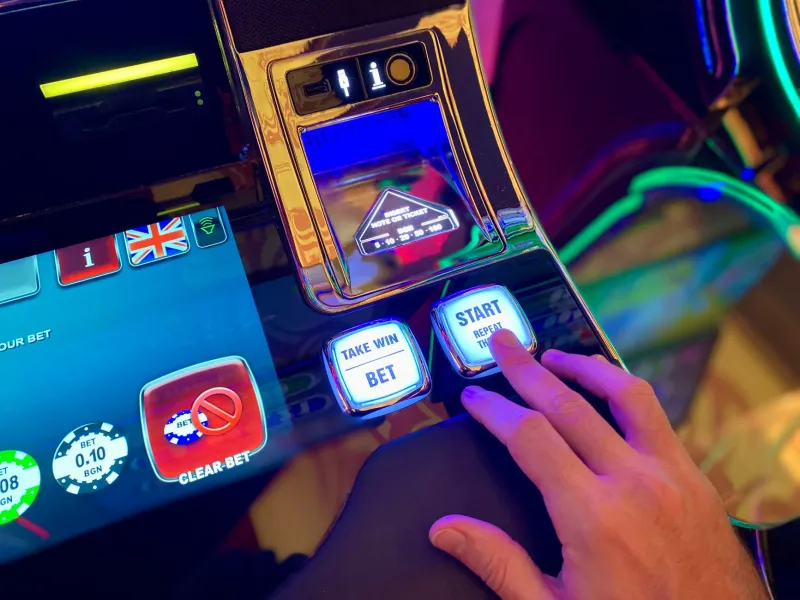
Auto-spin is the feature that most perfectly embodies this tension. On the surface, it's a convenience tool. Set your bet, set your rounds, sit back. But in practice, it fundamentally changes the nature of the activity.
Manual spinning requires a micro-decision every few seconds: Do I keep going? Is this still fun? How's my balance sitting? These micro-decisions are annoying, sure. But they're also your brain's natural checkpoints — tiny moments of self-regulation that add up to meaningful financial awareness over the course of a session.
Auto-spin eliminates those checkpoints entirely. You're no longer making dozens of small decisions; you've made one big decision at the start, and then you've handed the wheel to the machine. That's a significant transfer of agency, and most players don't consciously recognise it's happening.
Many platforms now offer "loss limit" settings within auto-spin, which is a genuine improvement. But the default settings rarely promote caution, and players in a fast-paced, stimulated state are not exactly primed to stop and configure responsible gambling parameters.
The Minimal Loading Time Problem
Here's one that might surprise you: those lightning-fast load times you appreciate? They're also working against you.
Loading screens — even brief ones — function as involuntary pause points. A two-second delay between games gives your brain a moment to surface from the flow state, however briefly. You might glance at your balance. You might notice you've been playing for longer than you thought. You might decide to stop.
When load times are reduced to zero, those natural interruption points disappear. The session becomes one continuous, unbroken experience rather than a series of discrete moments. That continuity is great for immersion. It's terrible for self-regulation.
Some harm-minimisation researchers have actually advocated for mandatory brief pauses built into game design — not as punishment, but as a structural nudge toward conscious decision-making. A few jurisdictions are beginning to explore this. For now, though, most platforms compete on speed, not slowdown.
Practical Strategies to Deliberately Throttle Back
Knowing all this, what can you actually do? The goal isn't to stop enjoying fast-paced games — it's to stay in the pilot's seat while you do.
Set a session timer before you start. Not a mental note — an actual alarm on your phone. When it goes off, stop and consciously assess: How's my balance? How am I feeling? Do I actually want to keep going, or am I just in the groove? That thirty-second check-in can save you a lot of money.
Use manual spin, even when auto is available. Yes, it's slower. That's the point. Every click is a micro-decision, a tiny act of agency that keeps your prefrontal cortex in the game.
Check your balance in real dollar terms regularly. Many players track their balance as credits or chips, which maintains the abstraction that makes losses feel less real. Switch your display to actual dollar amounts where possible, and check it every fifteen minutes.
Impose your own loading screen. Sounds ridiculous, but it works. Between sessions of auto-spin — or every twenty manual spins — close the game tab, take a breath, and reopen it. You're artificially recreating the interruption point that fast design has removed.
Play at a lower bet denomination than you normally would. Lower stakes mean slower bankroll depletion, which means more time at natural decision points before significant money is at risk. You're not reducing your enjoyment; you're extending your runway.
Speed Is a Feature — Learn to Use It
None of this is to say that fast gameplay is inherently bad or that online casinos are villainous for building engaging, frictionless experiences. Speed is part of the fun. The rush of a rapid-fire bonus round, the thrill of watching the reels blur — that's genuinely enjoyable, and there's nothing wrong with enjoying it.
But the same way a rocket pilot understands thrust, trajectory, and fuel consumption before they light the engines, a smart Aussie player understands how speed affects their judgment before they start spinning. The velocity trap only catches you if you don't know it's there.
Know it's there. Fly accordingly.