You're Not the Pilot: The Science Behind Why Aussie Players Think They Can Tame a Pokies Machine
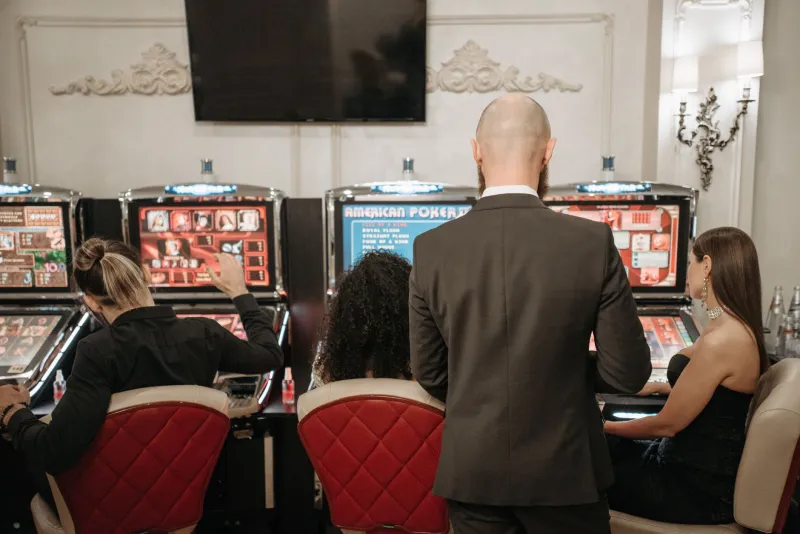
There's a moment most pokies players know intimately. You've been watching a machine for a while. Something feels different — the near-misses are stacking up, the sounds have a certain rhythm, and your gut is telling you with absolute conviction that the next spin is the one. You lean in. You hit the button with precision. You lose.
And yet, somehow, the feeling doesn't go away.
That sensation — the unshakeable belief that you've got some kind of read on the machine — is one of the most powerful and well-documented tricks the human brain plays on gamblers. It even has a name: the illusion of control. And for Aussie casino players, understanding it could be the difference between a fun session and a seriously expensive one.
What Is the Illusion of Control, Exactly?
Back in 1975, psychologist Ellen Langer ran a series of experiments that changed how researchers understood gambling behaviour. She found that people consistently acted as though they could influence outcomes that were entirely random — particularly when those outcomes involved familiar skill-based cues like choice, competition, or involvement.
In plain English: when a game feels like it responds to you, your brain starts acting like it does.
Modern pokies — whether you're playing at a physical pub in Parramatta or spinning through an online casino on your phone — are built around a Random Number Generator (RNG). Every single spin produces a completely independent result. The machine doesn't remember your last spin. It doesn't know you've been sitting there for forty minutes. It has no 'temperature'. It's not hot. It's not cold. It's just math, running thousands of calculations per second with zero memory of what came before.
But your brain? Your brain absolutely remembers. And it's been building a story.
The Cognitive Shortcuts That Get You Every Time
Humans are pattern-recognition machines. It's genuinely one of our greatest evolutionary strengths — spotting a predator in the bushes before it spots you requires exactly this kind of rapid, intuitive analysis. The problem is that this system doesn't come with an off switch, and it fires just as enthusiastically at random noise as it does at genuine signals.
A few specific biases are particularly active when Aussie players are at the reels:
The Gambler's Fallacy is probably the most famous. This is the belief that after a long run of one outcome, the opposite becomes more likely. If a coin lands heads ten times in a row, the eleventh flip feels almost certain to be tails. It isn't — it's still 50/50. The same logic applies to pokies. A machine that hasn't paid out in a hundred spins is not 'overdue'. The RNG doesn't do overtime.
The Hot Hand Fallacy runs in the opposite direction. After a couple of small wins, players often feel like they're on a streak — that some force is with them and the momentum is building. Casinos are very good at reinforcing this feeling with sound design and visual feedback. But again, each spin is its own isolated event. Yesterday's wins have no bearing on today's outcomes.
Confirmation Bias locks everything in. Once you've decided a machine is behaving a certain way, you unconsciously catalogue the spins that confirm your theory and dismiss the ones that don't. Three near-misses feel significant. The fifteen completely blank spins in between? Barely registered.
Why the Design of the Game Works Against You
Here's where it gets a bit uncomfortable: the features that make modern pokies engaging are also the features that supercharge the illusion of control.
Near-misses are a classic example. Seeing two jackpot symbols land on the payline with the third just above or below feels agonisingly close. Neurologically, it activates similar reward pathways to an actual win. Studies have shown that near-misses increase the desire to keep playing more than outright losses do — even though, from a probability standpoint, a near-miss is just a loss with better graphics.
Skill-adjacent features play a role too. Hold buttons, nudge features, bonus round decisions — these give players genuine moments of agency within the game. And that's not inherently a problem. But those pockets of real choice can bleed into the rest of the session, making players feel like their judgement is shaping outcomes that are actually predetermined.
Even the timing of when you press the button feels meaningful. Some players develop elaborate rituals — pressing fast, pressing slow, waiting for a specific moment in an animation cycle. The machine doesn't care. The RNG has already moved on thousands of cycles by the time your finger makes contact.
The Cost of Playing the 'Pilot'
When players believe they have control, they behave like they have control — and that changes how they gamble in ways that hurt their bankroll.
They stay longer. If you think you've figured something out, walking away feels like leaving money on the table. The machine is 'about to go', so you give it another twenty bucks. Then another.
They increase their bets at the wrong time. Confidence built on illusory pattern-reading often leads players to raise their stakes right when they feel certain — which, as any RNG will tell you, is no better a moment than any other.
They discount good advice. Players deep in the illusion of control are often the least receptive to being told the math doesn't work the way they think. The feeling is just too convincing.
How to Stay in the Passenger Seat (Where It's Actually Safer)
Knowing about the illusion of control doesn't make you immune to it — that's the genuinely frustrating part. These biases are baked into human cognition. But awareness does give you something to work with.
Before you start a session, remind yourself of the basics: every spin is independent, outcomes are random, and no amount of observation will give you a predictive edge on an RNG-based game. Set your limits before you log in, not during — because mid-session, when the illusion is running hot, your judgement is the least reliable.
If you notice yourself thinking in terms of 'due' machines, streaks, or patterns, treat it as a signal to take a break. Not because anything is wrong with you — it's just your very human brain doing its very human thing. Step back, get some water, and come back to the session with fresh eyes.
At Casino Rocket AU, we're all for the thrill of the launch. But the best way to enjoy the ride is to know exactly what kind of spacecraft you're in — and pokies, however exciting, are always going to be passenger vehicles.
You don't fly them. You ride them. And once you make peace with that, the whole experience gets a lot more enjoyable — and a lot less expensive.