One More Spin: The Tiny Phrase That's Quietly Draining Aussie Bankrolls
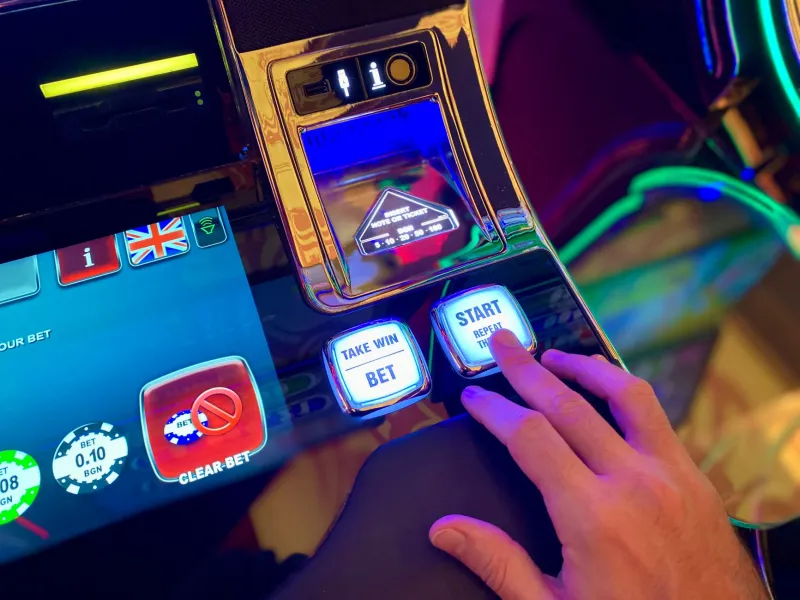
You've been at it for an hour. Your balance is down, but not catastrophically. You told yourself you'd stop at 9pm. It's now 10:47. And somehow, you're still clicking that spin button.
Sound familiar? If you're an Aussie casino player — whether you're grinding away on online pokies or sitting at a virtual blackjack table — that creeping "just one more" feeling is one of the most expensive habits you'll ever develop. Not because each individual spin is ruinous, but because that logic compounds. One becomes five. Five becomes twenty. And before your brain has caught up with your wallet, the session you planned has become something else entirely.
So why does this keep happening? And more importantly, what can you actually do to stop it?
Your Brain Is Running Old Software
Here's the uncomfortable truth: your brain was not built for online casino gameplay. It was built for a world where rewards came slowly, where hunting and gathering required patience, and where the occasional big payoff — a successful hunt, a good harvest — triggered a dopamine flood that reinforced the behaviour.
Fast-forward to 2024, and you're sitting in front of a screen where that same dopamine system is being pinged dozens of times per minute. Every spin is a micro-event. Every near-miss is a near-reward. And your ancient neural wiring genuinely cannot tell the difference between "almost won" and "almost won, try again immediately."
This is not a metaphor. Research into gambling behaviour consistently shows that near-miss outcomes — where the reels stop just one symbol short of a jackpot, for instance — activate reward-processing centres in the brain almost as intensely as actual wins. Your dopamine system treats a near-miss as meaningful information, essentially whispering: you're close, keep going.
The problem? You're almost never actually close. The outcome of the next spin is statistically independent from the last one. The slot doesn't owe you anything. But your brain doesn't fully believe that, especially not after midnight, especially not after a few drinks, and especially not when the graphics and sound design are specifically engineered to amplify that near-miss feeling.
How Modern Online Pokies Are Different From the Pub Machine
If you grew up feeding coins into a pokie at your local RSL, you might assume online slots work the same way. They don't — not entirely.
Traditional pokies have a physical rhythm. You insert a coin, you pull a lever or press a button, you wait. There's a mechanical delay baked into the process. That friction, minor as it seems, creates a natural pause point. Your body resets slightly between each play.
Online pokies — particularly those with autoplay features — have almost entirely eliminated that friction. The gap between spins can be under a second. Some games allow you to queue up hundreds of automatic spins, meaning your decision-making brain essentially gets sidelined for minutes at a time. By the time autoplay stops, you've already processed a significant chunk of your session budget without consciously choosing to do so.
The speed of play is a feature, not a bug. Faster gameplay means more spins per hour, which means more engagement, which means more revenue for the house. Casino Rocket AU is all about fast-paced thrills — but there's a difference between riding the rocket and letting it fly you somewhere you didn't intend to go.
The Impulse Control Problem Nobody Talks About
Here's something that doesn't get enough airtime in responsible gambling conversations: stopping is a decision that requires cognitive resources. And cognitive resources deplete over time.
Psychologists call this "decision fatigue." The more choices you make throughout the day — or throughout a session — the worse your subsequent decisions tend to become. By the time you've been playing for 90 minutes, you are genuinely less equipped to make a rational stopping decision than you were at the start. Your prefrontal cortex, the part of the brain responsible for impulse control and long-term thinking, is running on fumes.
This is why "I'll stop when I feel like stopping" is such a flimsy strategy. You're essentially planning to make an important financial decision at exactly the moment your decision-making capacity is most compromised. It's like planning to read the fine print on a contract after pulling an all-nighter.
Friction Is Your Friend
So what actually works? The answer isn't willpower — it's architecture. Specifically, building friction into your session before you start, when your brain is still sharp.
Set a hard deposit limit before you log in. Most reputable Australian online casinos offer responsible gambling tools that let you cap how much you can deposit in a day, week, or month. Use them. Once the money is gone, the decision is made for you — no willpower required.
Use a physical timer, not a mental one. Telling yourself "I'll stop at 10pm" rarely works because you're relying on memory and willpower at the exact moment both are weakest. Set an actual alarm on your phone. When it goes off, close the tab. The alarm does the deciding so you don't have to.
Disable autoplay. Seriously. Every spin should be a conscious choice. The moment you switch to autoplay, you've handed the steering wheel to the game. Manual play is slower, yes — but that's the point. Each pause is a micro-opportunity for your rational brain to check in.
Write down your stopping point before you start. This sounds almost too simple, but externalising your intention makes it more binding. There's a reason surgeons use checklists and pilots run pre-flight protocols — written commitments are harder to rationalise away in the moment. Your pre-session note might just say: "Stop at $50 down or 45 minutes, whichever comes first." Stick it somewhere visible.
Log out between sessions. If you've hit your limit and you're thinking about reloading, the act of logging back in and re-entering your details creates just enough friction to interrupt the impulse. Many players find that a five-minute break is enough for the urge to pass.
The Real Cost of "Just One More"
Let's put some numbers to it. Say you're playing a pokie at $2 a spin with a spin rate of 30 per minute. "Just five more minutes" is actually 150 spins and $300 in wagers. At a 95% RTP, your expected return on that extra $300 is $285 — meaning your "just five more minutes" decision carries an expected cost of $15, on top of whatever you've already spent.
Multiply that across a dozen sessions a month and you're looking at a meaningful chunk of change, all from a decision your fatigued brain made in a moment of "almost there" optimism.
The rocket metaphor is apt here. A spacecraft that overshoots its trajectory by just a small margin can end up thousands of kilometres off course. The "one more spin" drift is exactly like that — small in the moment, significant over time.
Know When to Hit the Abort Button
None of this means you can't enjoy a cracking session at your favourite online casino. Casino Rocket AU is built for players who want the thrill of fast gameplay and genuine wins. But the players who enjoy it most sustainably are the ones who launch with a plan and know exactly when to fire the retro rockets and bring it home.
The "one more spin" trap isn't a character flaw — it's a neurological response to a system that's been designed, very cleverly, to trigger it. Recognising that isn't a reason to feel bad. It's a reason to build better habits before you need them.
Because the best session you'll ever have is one where you walk away on your own terms.