Betting Systems and Big Promises: Do Martingale and Friends Actually Work for Aussie Players?
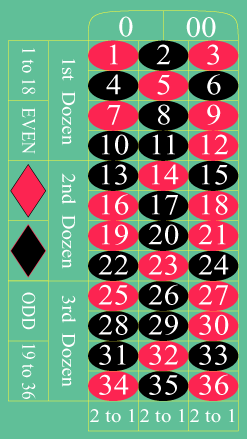
Photo: Film8ker at English Wikibooks, Public domain, via Wikimedia Commons
Every few months, a new thread pops up on an Aussie gambling forum with some variation of the same claim: "I've cracked it. Double up after every loss and you can't go broke." The replies are predictably split between true believers and battle-scarred veterans who've heard it all before.
Betting systems are one of the most persistent myths in gambling culture. They've been around longer than most modern casinos, and they're still being sold — sometimes literally, in e-books and YouTube courses — as reliable paths to profit. So let's actually look at them properly. Not just the theory, but what happens when real money meets real table limits in real Australian casinos.
What Is a Betting System, Really?
At its core, a betting system is a structured approach to adjusting your wager size based on previous outcomes. The idea is that by following a specific pattern, you can either recover losses more efficiently or lock in profits before a losing streak wipes you out.
They generally fall into two camps:
Negative progression systems — You increase your bet after a loss. The logic is that a win will eventually come and cover your previous losses. Martingale is the most famous example.
Positive progression systems — You increase your bet after a win. The idea here is to ride hot streaks and minimise damage during cold runs. The Paroli system sits in this category.
Then there are hybrid systems like the Labouchère (also called the cancellation system), which involves writing out a sequence of numbers and adjusting bets based on whether you win or lose. It sounds sophisticated. It looks sophisticated. But does sophistication translate to profit?
The Martingale: The Most Famous Rocket That Keeps Exploding
Let's start with the big one. The Martingale system tells you to double your bet every time you lose. Win, and you recover all previous losses plus a small profit equal to your original stake. It's mathematically elegant — in theory.
Here's the problem: it assumes you have infinite money and that the casino has no table limits. Neither of those things is true.
Say you start with a $10 bet on roulette. Lose five times in a row — which happens more often than people expect — and you're now betting $320 on the sixth spin just to recover $10 in profit. Hit a table limit of $500 before your winning spin arrives, and the system collapses entirely. You can't double up anymore, and you're sitting on a substantial loss with no way to recover it through the system's own logic.
The uncomfortable truth is that Martingale doesn't reduce the house edge by a single decimal point. It just restructures when you lose — concentrating risk into rare but catastrophic events rather than spreading it across many small losses. For Aussie players on a budget, that's a particularly dangerous trade-off.
The Labouchère: Complicated Doesn't Mean Better
The Labouchère system has a certain appeal to analytically minded players. You write down a sequence of numbers — say, 1-2-3-4 — and your bet is always the sum of the first and last numbers in the sequence. Win, and you cross both numbers off. Lose, and you add your losing bet to the end of the sequence.
It feels like you're doing something clever. You've got a notepad. There are numbers. It looks like a strategy.
But here's the thing: the house edge doesn't read your notepad. Every spin of the roulette wheel, every hand of blackjack, is an independent event. The casino doesn't know or care that you've got a sequence of numbers that says you're owed a win. The maths of the game remain exactly the same regardless of what your previous bets were.
The Labouchère can also spiral into very large bets during a losing run, similar to Martingale. The sequence grows, the required bets grow, and eventually you're either hitting table limits or your own bankroll ceiling.
What the Maths Actually Says
Here's the part that no betting system seller wants to put in their promotional material: no betting system can change the expected value of a negative-expectation game.
If a roulette wheel has a house edge of 2.7% (European) or 5.26% (American), that percentage applies to every dollar you wager over time. It doesn't matter if those dollars are arranged in a Martingale sequence, a Labouchère grid, or a Fibonacci spiral. The casino's mathematical advantage is baked into the game design itself — not into the order or size of your bets.
This is a provable mathematical fact, not an opinion. And it's the reason that professional mathematicians and gambling researchers are universally sceptical of betting systems as profit tools.
So Why Do Players Keep Believing?
Because in the short term, they can feel like they work.
If you sit down with a Martingale strategy and have a decent run, you'll walk away with consistent small wins and think you've found the secret. Confirmation bias does the rest — you remember the winning sessions and explain away the losses as bad luck or user error.
There's also a psychological comfort in having a system. Gambling can feel chaotic and arbitrary. A structured approach gives players a sense of control, even when that control is largely illusory.
Is There Any Legitimate Use for These Systems?
Fair question. The honest answer is: maybe, in a very limited sense.
Positive progression systems like Paroli can be a reasonable bankroll management tool if your goal is to have fun, extend your sessions, and occasionally ride a hot streak without catastrophic downside risk. They won't improve your odds, but they can structure your play in a way that feels more disciplined.
For Aussie players who enjoy the ritual of a structured approach — and who understand they're not actually gaining an edge — systems can add an extra layer of engagement to the game. Just go in with your eyes open.
The Bottom Line
Betting systems are not rocket fuel. At best, they're a way of organising your bankroll. At worst, they're a fast track to losing more money more quickly while feeling like you're doing something smart.
The only genuine edge available to casino players comes from game selection (choosing high-RTP games), bonus optimisation (claiming free spins and match deposits strategically), and disciplined bankroll management. None of those things require a notepad and a complicated number sequence.
If someone's selling you a betting system that promises consistent profits, ask yourself one question: if it actually worked, why would they be selling it instead of using it themselves?
The house edge is real. The maths don't lie. And the fastest way to launch your casino session into orbit is to understand the game you're playing — not to dress up wishful thinking in the language of strategy.